Wednesday, July 31, 2013

What came before the AC

Image Source: wired.com


Many inventors tinkered with modern strategies for keeping cool under the heat. But it was Willis Haviland Carrier’s invention called the 'Apparatus for Treating Air' (U.S. Pat# 808897) that proved the plausibility of manmade weather by controlling temperature and humidity, eventually earning him the title as the father of airconditioning. Carrier started an era of refined understanding of electrical systems through his Rational Psychrometric Formulae, which remains the basis for all the integral calculations in the airconditioning industry.


But the attempts to outsmart the weather before the AC came along also warrant attention. Practical strategies to stay cool existed at the dawn of the 20th century. People braved the hot weather with fans of all shapes and sizes. The Roman Emperor Elagabalus made his mark by warding off third-century summer by commanding 1000 slaves to fill his pleasure-garden with a mountain of snow.


Image Source: hauntedhistorians.com


Fast forward to 1758, Benjamin Franklin and John Hadley discovered that the evaporation of liquids had a cooling effect. Michael Faraday discovered the same in 1820. By the 1830s, Dr. John Gorrie built an ice-making machine in a hospital in Florida. He then patented the idea in 1851 but financial struggles killed off his invention. In 1881, following an attempted assassination of President James Garfield, naval engineers created a makeshift cooling machine that used half a million pounds of ice to keep the injured president cool and comfortable. The machine failed in its mission.


Image Source: thelibertyblog.org


By the 1920s, residential cooling machines were invented, thanks to iconic aircon marque Carrier, which began the science of modern airconditioning for home use.


Hobson Air is among the many cooling and heating systems contractors which uphold Carrier’s science of modern air conditioning. Go here for more exciting discoveries in the airconditioning industry.

Monday, May 27, 2013

REPOST: Updating your cooling system is a smart investment

The average useful life expectancy of an air conditioning unit is 10 years. To keep it running efficiently, regular maintenance is a must. Chron tackles the importance of updating air conditioners below.

If you’re a seasoned homeowner, you know houses require a lot of upkeep. Experience also shows the best home projects offer a dual advantage: they add to your quality of life and to your home’s overall value. And if an improvement helps save money in the long run? That’s a triple win!

Image Source: chron.com

Dave Borowski, spokesperson for Direct Energy Protection Plans, says updating your cooling system can offers these benefits: “The useful life expectancy of an air-conditioning unit is usually seven to 10 years — much like a car, it might keep running but not as efficiently. And professional maintenance can increase the product’s life expectancy, improve performance and help reduce the severity and frequency of breakdowns.” So if you do plan to update your home’s cooling system, here are tips to ensure that investment pays off:

Find a good contractor. Look for the best credentials, not the best price: “A questionable contractor can cut the cost, but he may also cut corners,” warns Borowski. A NATE certification (National Alliance for Technical Education) is one standard of quality. Referrals — from online sources, and from people who had AC units installed 10 years ago or 10 days ago — can tell you a lot about contractor’s workmanship over the short- and long-term. “The most important day in an air conditioner’s life is Day #1, when it’s installed,” notes Borowski. “If it’s not perfect then, it will never get better.”

Buy the highest efficiency unit that you can afford. Face it: Electric rates are not likely to go down. Spending a bit more for an energy-efficient unit can actually lead to long-term savings.

Ask about rebates. Many vendors seasonally bring out rebates to help boost sales; check with your contractor to see if there are good deals out there.
Make sure your ductwork is properly sized for your air conditioner. “Just because your ductwork is there – and has been there for 22 years – doesn’t mean it’s right,” explains Borowski. An improper fit means the unit won’t work as efficiently as it should. A good contractor will check this, but it never hurts to bring it up.

Get a programmable thermostat. The newest versions let you monitor the AC right from a smart phone: “With the Comfort Sentry ThermostatTM, you can control the temperatures and set schedules to fit household needs,” says Borowski. To save energy — and energy dollars — you can raise the temperature during daytime hours when no one is home, and have things cool down automatically by 5 p.m. “Or suppose you’re at the airport, ready to go on vacation, and suddenly realize, ‘Ugh, I forgot to turn the thermostat off! It’s going to be cooling the house for two weeks while we’re on a cruise.’ Now, all you’ve got to do is go to your smart phone and put the thermostat in ‘vacation’ mode. Running the AC when you’re gone is equivalent to running ceiling fans when you’re gone!”

Check the service options. Even the best-installed air conditioner can break down; find out when your contractor does warranty service. “Some only do it Monday through Friday, 9 to 5,” says Borowski. “Imagine if your air conditioner breaks down at 5:15 on a Friday, and your contractor says he’ll be happy to help you Monday morning! Make sure you’ve got someone who stands behind his work and will perform warranty service 24/7. If not, you’ve got the wrong contractor.”

Image Source: chron.com

The air conditioning and heating specialists at Comfort Experts perform preventive maintenance checks, service of existing equipment, installation of new equipment, and cost-benefits analysis. To know the right time to update or replace an air conditioning unit, read here.

Monday, May 6, 2013

Pets need air conditioners, too


Image Source: theanimalmedicalclinic.com


When the air conditioning unit of a Chicago animal welfare center was stolen, about a hundred cats and dogs were put in danger. The temperature at the time of the robbery was approaching 80 degrees and it was an unsafe heat for many animals to be exposed to. The meager funding that was allocated for the animals’ food and medicine had to be used just to stabilize the units. The incident was a proof of the importance of air conditioners to pets.

Dogs and cats may suffer from heat strokes and heat exhaustion when the environment is too hot. Unlike humans, they cannot expel too much body heat. They only pant and release sweat through their noses and foot pads. When they fail to expel heat effectively, their internal body temperature rises. At a body temperature of 106 degrees, they suffer from damaged brain and body organs. In extreme cases, they die.

Image Source: huffingtonpost.com
 
Image Source: whatever.scalzi.com

The cold air circulation that air conditioners provide can greatly help furry pets regulate their body temperature, especially during summer days when heat waves strike. The cool environment of air-conditioned rooms is also beneficial for more heat-sensitive dogs, including the obese, the ill, and the short-nosed breeds, like pugs and bulldogs.

There may be other ways that dogs and cats regulate their body temperature, but getting help from air conditioners is still one of the safest means. Enjoying cool air inside their owners’ homes, they do not have to wander outdoors and risk being attacked by other animals or impounded by animal control officers. As domesticated animals, they have lost many of their survival skills in the harsh environment and have evolved to share the benefits of technology with their human companions.

Image Source: portableairconditionerblog.securepets.com
  
AC Genius, an air conditioning contractor in Texas, can install complete heating, ventilation, and air conditioning (HVAC) system. To get more information on the benefit of air conditioning units, follow this blog.

Tuesday, April 9, 2013

Ways to save energy when room air conditioning is a must


Image source: windowsontario.com


Air conditioning is a necessity in hot weather. The unit helps people stay cool and protected from heat-related illness and death. However, there are those who are unresolved in buying an air conditioner because of the need to save money and energy.

If both air conditioning and energy conservation are a must, here are tips to consider:

1. Buy an air conditioner with ENERGY STAR label.

An air conditioner with an ENERGY STAR seal means that the appliance uses less energy, saving its user money, and helps protect the environment—as determined by the Department of Energy and the Environmental Protection Agency.

2. Choose the right type of air conditioner.

When buying a room air conditioner, choose a unit with an energy efficiency ratio (EER) of 10.0 or above. This will cut the air conditioning energy costs in half. Window and portable units, which cool room instead of a whole building, also use less than 50 percent energy compared to central units.


Image source: lowes.com


3. Use the air conditioner properly.

To conserve energy, close the window and outside doors when turning the unit on. Also keep the unit clean to make it run efficiently. Clogged filters make the air conditioner work harder, which adds to higher electricity consumption.

5. Get an energy-conservation analysis

An energy-conservation analysis can determine the home’s energy consumption and the money that goes into using these energies. Air conditioning and heating contractors, like Hobson Air and Service Experts, conduct energy-conservation analysis at the request of clients.

Following these energy-conservation tips will help people save money and energy without depriving themselves of the comfort and protection that air conditioning provides.


Image source: comparequotes.net

This webpage explains how an energy-conservation analysis works.

Wednesday, March 6, 2013

Legionella: The bacteria that inhabits cooling towers


Image source: feedwater.co.uk

Legionella is a type of bacterium that causes the respiratory illness called legionellosis.


Legionella dwells in natural water systems, but thrives more in hot and artificial water systems. The Center for Disease Control and Prevention explains that the heated water of cooling towers of air conditioning systems provides an ideal environment for Legionella growth. Accom News adds that the bacteria “is most active when the temperature of the water is between 20° and 45° and there is sufficient nutrient to support growth and multiplication.”


Image source: whatiswatertreatment.files.wordpress.com

When people breathe in water droplets that contain legionella, they can be infected with legionellosis. In 1976 in Philadelphia, there was an outbreak of the disease when the American Legion convention members got infected due to contaminated cooling towers. Legionnaire’s disease, a form of legionellosis, was coined after this outbreak.


To prevent legionella from thriving in the cooling towers of air conditioning systems, regular inspection and cleaning must be observed. Both cooling tower manufacturers and companies that have cooling towers must follow strict maintenance guidelines. Companies can also seek the services of air conditioning and heating contractors like Comfort Experts and Quality Cooling and Heating, which conduct air quality analysis to make sure that there is no legionella in the air.


Image source: wikimedia.org

How does an air quality analysis work? Find out by vising this website.

Thursday, February 7, 2013

Heating and cooling systems for underground shelters

Nuclear threats, extreme weather, and doomsday predictions – people can never tell when they’re going to happen, but they can always prepare for the worst rather than be sorry.

Image source: americanpreppersnetwork.com


One of the options people could take is to build an underground shelter, at least 8 feet deep, adjacent to the occupants’ house, and equipped with the necessary survival kits and proper ventilation.


The chapter on Nuclear War Survival Skills of the book Fighting Chance: Ten Feet to Survival by Eugene P. Wigner notes that one of the most significant survival skills that people should learn is “how to keep occupied shelters adequately ventilated in all seasons and cool enough for many days of occupancy in warm or hot weather.”

Image source: mortgageticket.com


The author recommends using a large-volume shelter-ventilating pump, an expedient heating machine which doesn’t require ample technical know-how to build. The book shows how to build the machine using inexpensive household materials.


Another heating systems option is to use geothermal heat pumps run by electricity generated through solar power. Builders may need to hire a professional to set up the heat pumps. Heating and systems contractors, like Hobson Air and A Plus Quality Inc., can provide necessary assistance. Adequate ventilation is still required during freezing weather conditions as the earth’s moist will continue to absorb body heat, leaving the occupants prone to weather-related illnesses.


Natural ventilation can be achieved by following the structure of an Eskimo igloo. The spiral dome is built with small ventilation openings poked at the ceiling and at the floor to protect its occupants from harsh temperatures. A shelter with a chimney-like vent is proven to be useful during cool weather, supplying occupants with enough air needed to prevent the build-up of carbon dioxide. However, it should be noted that this vent may not work during warm weather.

Image source: businessinsider.com


Experts from Hobson Air can assess whether or not your underground shelter is well- ventilated. This website offers more about proper ventilation during harsh weather conditions.

Thursday, January 24, 2013

REPOST: Why 2013 could be a game-changer on climate

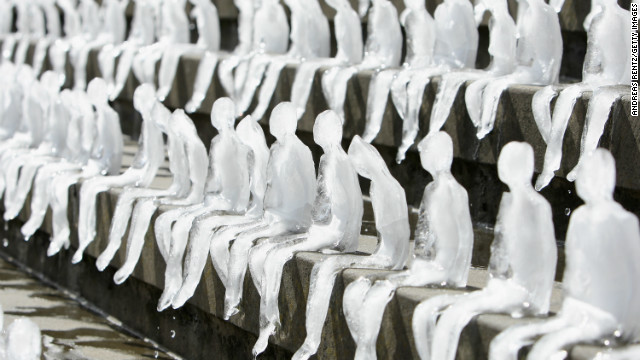
Last year's elections saw the country's leaders tackle many of our most pressing issues. However, climate change did not seem to be one of them. This year, the discussion seem to be making a comeback, after the nation saw firsthand how extreme weather events have cost our economy billions of dollars in recovery. This CNN article details how climate change may be a hot topic in the World Economic Forum in Davos this month.
Image source: CNN
(CNN) -- As leaders gather for the World Economic Forum in Davos, signs of economic hope are upon us. The global economy is on the mend. Worldwide, the middle class is expanding by an estimated 100 million per year. And the quality of life for millions in Asia and Africa is growing at an unprecedented pace.

Threats abound, of course. One neglected risk -- climate change -- appears to at last be rising to the top of agendas in business and political circles. When the World Economic Forum recently asked 1,000 leaders from industry, government, academia, and civil society to rank risks over the coming decade for the Global Risks 2013 report, climate change was in the top three. And in his second inaugural address, President Obama identified climate change as a major priority for his Administration.

For good reason: last year was the hottest year on record for the continental United States, and records for extreme weather events were broken around the world. We are seeing more droughts, wildfires, and rising seas. The current U.S. drought will wipe out approximately 1% of the U.S. GDP and is on course to be the costliest natural disaster in U.S. history. Damage from Hurricane Sandy will cost another 0.5% of GDP. And a recent study found that the cost of climate change is about $1.2 trillion per year globally, or 1.6% of global GDP.

Shifting to low-carbon energy sources is critical to mitigating climate change's impacts. Today's global energy mix is changing rapidly, but is it heading in the right direction?

Coal is the greatest driver of carbon dioxide emissions from energy, accounting for more than 40% of the total worldwide. Although coal demand is falling in the United States -- with 55 coal-powered plants closed in the past year -- it's growing globally. The World Resources Institute (WRI) recently identified 1,200 proposed new coal plants around the world. And last year, the United States hit a record-high level of coal exports—arguably transferring U.S. emissions abroad.

Meanwhile, shale gas is booming. Production in the United States has increased nearly tenfold since 2005, and China, India, Argentina, and many others have huge potential reserves. This development can be an economic blessing in many regions, and, because carbon emissions of shale gas are roughly half those of coal, it can help us get onto a lower carbon growth path.
However, while gas is an important bridge to a low carbon future—and can be a component of such a future—it can't get us fully to where we need to be. Greenhouse gas emissions in industrial countries need to fall by 80-90% by 2050 to prevent climate change's most disastrous impacts. And there is evidence that gas is crowding out renewables.
Renewable energy -- especially solar and wind power -- are clear winners when it comes to reducing emissions. Unfortunately, despite falling prices, the financial markets remain largely risk-averse. Many investors are less willing to finance renewable power. As a result of this mindset, along with policy uncertainty and the proliferation of low-cost gas, renewable energy investment dropped 11%, to $268 billion, last year.
What do we need to get on track?

Incentivizing renewable energy investment
Currently, more than 100 countries have renewable energy targets, more than 40 developing nations have introduced feed-in tariffs, and countries from Saudi Arabia to South Africa are making big bets on renewables as a growth market. Many countries are also exploring carbon-trading markets, including the EU, South Korea, and Australia. This year, China launched pilot trading projects in five cities and two provinces, with a goal of a national program by 2015.

Removing market barriers
Despite growing demand for renewable energy from many companies, this demand often remains unmet due to numerous regulatory, financial, and psychological barriers in the marketplace.
In an effort to address these, WRI just launched the Green Power Market Development Group in India, bringing together industry, government, and NGOs to build critical support for renewable energy markets. A dozen major companies from a variety of sectors—like Infosys, ACC, Cognizant, IBM, WIPRO, and others— have joined the initiative. This type of government-industry-utility partnership, built upon highly successful models elsewhere, can spur expanded clean energy development. It will be highlighted in Davos this week at meetings of the Green Growth Action Alliance (G2A2).

De-risking investments
For technical, policy, and financial reasons, risks are often higher for renewables than fossil-based energy. Addressing these risks is the big remaining task to bring about the needed energy transformation. Some new funding mechanisms are emerging that can help reduce risk and thus leverage large sums of financing. For example, the Green Climate Fund could, if well-designed, be an important venue to raise funds and drive additional investments from capital markets. Likewise, multi-lateral development banks' recent $175 billion commitment to sustainable transport could help leverage more funds from the private and public sectors.

Some forward-looking companies are seeking to create internal incentives for green investments. For example, companies like Unilever, Johnson & Johnson, and UPS have been taking actions to reduce internal hurdle rates and shift strategic thinking to the longer-term horizons that many green strategies need.

Davos is exactly the type of venue for finding solutions to such issues, which requires leadership and coalition-building from the private and public sectors. For example, the the G2A2, an alliance of CEOs committed to addressing climate and environmental risks, will launch the Green Investment Report with precisely the goal of "unlocking finance for green growth".
Depending on what happens at Davos—and other forums and meetings like it throughout the year—2013 could just be a game-changer.

Andrew Steer | Image source: CNN
Editor's note: Andrew Steer is President and CEO of the World Resources Institute, a
think tank that works with governments, businesses and civil society to find sustainable solutions to environmental and development challenges.


Weather is increasingly unpredictable. Keep your home temperature stable with cost-effective heating and cooling systems. Get a free quote from Hobson Air. See more information on this website.